
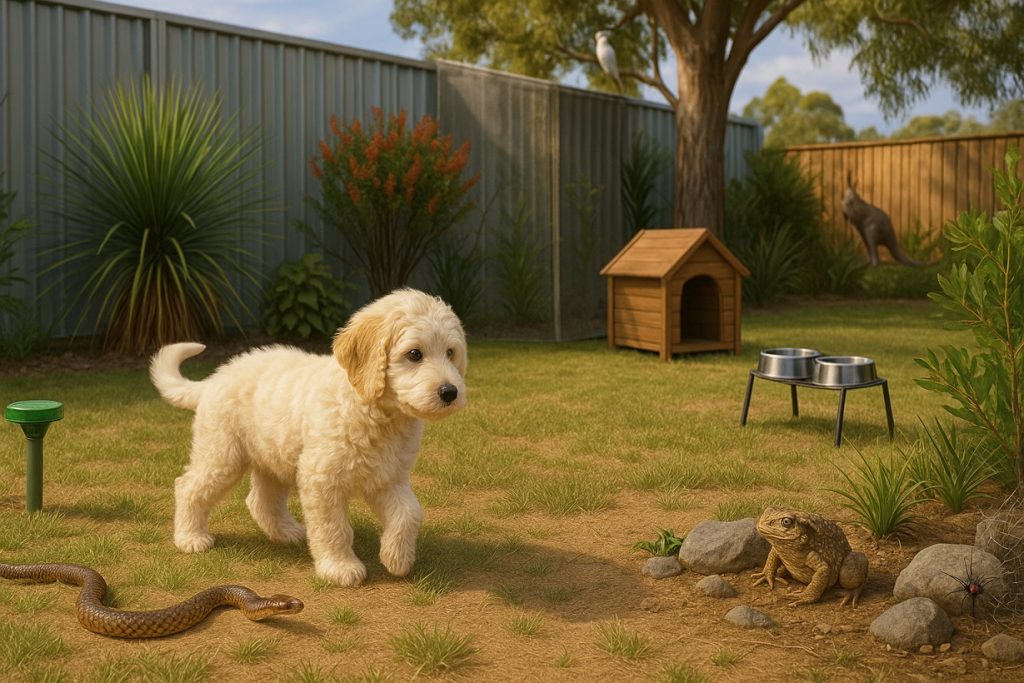
Bringing home a new puppy is an exciting adventure, especially here in Australia where outdoor living is a big part of our lifestyle. But as puppy parents, it’s our responsibility to make sure our little companions stay safe while exploring their new world, and that includes keeping them protected from the unique (and sometimes dangerous) wildlife and insects Australia is known for.
As a breeder and long-time dog lover living in regional Australia, we’ve seen firsthand how curious puppies can be, and how important it is to understand the environment they’re growing up in. In this guide, we’ll walk through practical, real-life tips to help you protect your pup from potential hazards in the great Aussie outdoors.
Why Wildlife and Insects Matter for Aussie Puppy Owners
Australia is home to some of the world’s most beautiful landscapes; and yes, also some of the most interesting creatures. From snakes and spiders to ticks and toads, the natural environment here can pose risks to young dogs who don’t yet know what’s safe and what’s not.
Puppies are naturally curious and tend to explore almost everything with their noses and mouths. This makes them more vulnerable to bites, stings, or even poisoning from contact with certain animals and insects.
Common Wildlife and Insects That Pose Risks to Puppies
Here are a few key creatures to be aware of, especially if you live in a bushy area or near open land:
Snakes
Australia is home to several venomous snakes, including the Eastern Brown, Red-Bellied Black Snake, and Tiger Snake. These snakes are most active in warmer months and can often be found in long grass or around water sources.
What to do:
- Keep grass short and yards tidy to discourage snakes.
- Don’t let puppies roam through bushland unsupervised.
- If you see a snake, calmly remove your pup from the area and call a licensed snake catcher.
Spiders
While most Australian spiders aren’t deadly, a few; like the Redback or Funnel-Web, can be dangerous, especially to small dogs.
Prevention tips:
- Shake out puppy bedding or toys that have been stored in sheds or garages.
- Keep outdoor play areas clean and free from clutter.
- Consider pest control in high-risk areas.
Fleas, Ticks & Mosquitoes
These biting insects are not just irritating; they can carry serious health risks. Paralysis ticks, in particular, are a big concern along the East Coast and can be deadly if not treated quickly.
Protect your pup by:
- Using vet-recommended flea and tick preventatives.
- Checking your dog daily, especially around the neck, ears, and underbelly.
- Avoiding long grass or bush walks during tick season (spring and summer).
Cane Toads
Cane toads are toxic to dogs when licked or bitten. Puppies often mistake them for toys which is a deadly mistake.
Helpful tip: If your puppy does come into contact with a cane toad:
- Rinse their mouth with a damp cloth (never use a hose).
- Keep their head facing downward to avoid swallowing toxins.
- Call your vet immediately, it’s a medical emergency.
Creating a Safe Backyard Environment
One of the best ways to protect your pup is by creating a safe, secure space for them to play and grow. Here’s how:
Fencing and Gates
Make sure your yard is fully fenced and that there are no gaps under gates or around the fence line where wildlife could enter.
Yard Maintenance
- Keep grass trimmed short.
- Clear piles of wood, rocks, or debris that could shelter snakes or spiders.
- Avoid leaving pet food outside as it can attract rodents and larger wildlife.
Puppy Play Zones
Set up a shaded, enclosed area where your pup can safely play without full access to the entire yard, especially during their first few months at home.
Safe Exploring on Walks and Adventures
Australia has plenty of dog-friendly trails, but some caution is needed when venturing out with your puppy.
Use a Leash
Always walk your puppy on a lead, especially in rural or bushy areas where wildlife encounters are more likely.
Stay on Trails
Stick to well-trodden paths and avoid dense bush or tall grass where snakes, ticks, or spiders may be hiding.
Consider Insect Repellents
Ask your vet about pet-safe repellents that can help reduce the risk of mosquito or tick bites.
What to Do in Case of a Bite or Sting
It’s important to know the signs that something may be wrong and to act quickly.
Watch for These Symptoms:
- Drooling, vomiting, or seizures
- Sudden weakness or collapse
- Excessive swelling or pain
- Change in breathing or behavior
If you notice any of the above, contact your vet immediately. Time is often critical in treating bites, especially from ticks or snakes.
Vet-Recommended Protection Plans
Speak with your local veterinarian about setting up a protection plan for your puppy. This might include:
- Regular flea, tick, and worming treatments
- Vaccinations based on local risks
- Preventive sprays or spot-on treatments
- First-aid guidance in case of an emergency
Some areas have higher wildlife activity than others, so a local vet can give you the best advice for where you live.
Final Thoughts
Raising a happy, healthy puppy in Australia is one of life’s great joys, and it’s absolutely possible with a few simple safety measures in place. By understanding the risks and taking practical steps to reduce them, you’re not just protecting your pup, you’re helping them build confidence to safely explore the big, beautiful Aussie world around them.
At Serenity Bay Puppies, we raise our litters with safety in mind from day one, and we’re always here to support our puppy families with guidance based on real-life experience. If you ever have questions about puppy care, don’t hesitate to reach out.